Clean Technology and Smart Energy Services for Australian SMEs in 2026
Australia’s energy transition is creating a broad technology market that extends well beyond manufacturing solar panels or developing utility-scale projects. In 2026, SMEs may find strong opportunities in the digital systems, installation support, maintenance services, and financing coordination required to make clean energy assets work effectively.
Small businesses, commercial property owners, farms, hospitality operators, and community organisations increasingly need help understanding energy consumption and selecting practical upgrades. Technology providers that simplify these decisions can build recurring, service-based businesses.
Energy Monitoring as an Entry Point
Many organisations receive an electricity bill without having a detailed view of when, where, or why energy is being consumed. Smart meters, connected sensors, and management software can provide more useful operational data.
An SME could install monitoring devices and provide a dashboard that identifies peak demand, equipment running outside business hours, unusual consumption, or potential maintenance issues.
The service becomes more valuable when it includes interpretation. Clients may not need additional charts; they need clear recommendations showing which changes could lower costs and how quickly an investment may pay back.
Sector-Specific Applications
Hospitality businesses may need refrigeration monitoring, kitchen equipment scheduling, and temperature alerts. Warehouses could benefit from lighting controls, solar production tracking, and demand management.
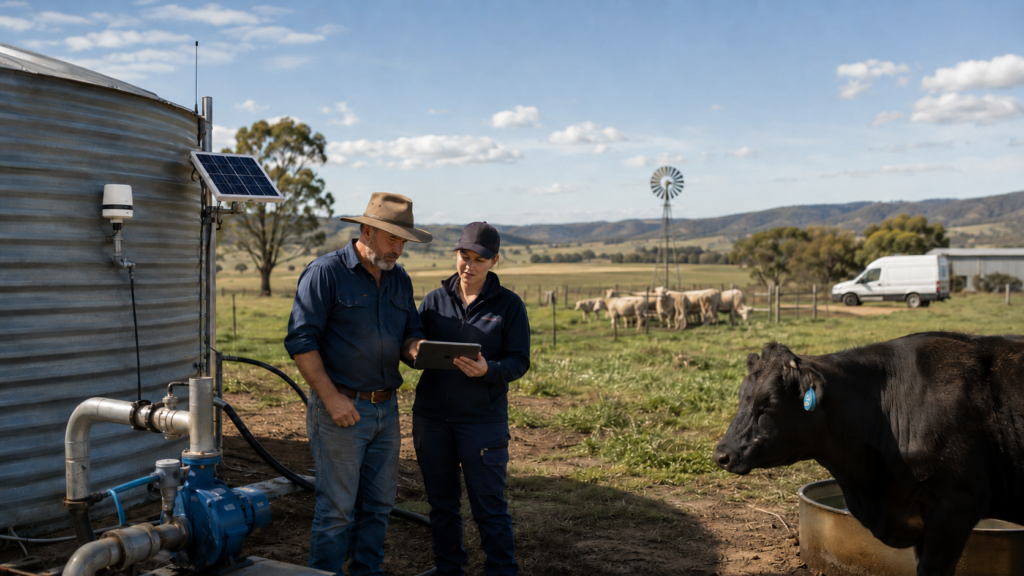
Agricultural operators may use connected systems to monitor pumps, irrigation, storage temperatures, and remote equipment. Commercial property managers may need portfolio-level reporting across several buildings.
A specialised provider can develop templates and benchmarks for one sector, improving sales efficiency and creating a clearer value proposition.
Solar, Batteries and Asset Performance
Installing clean energy equipment is only one part of the market. Existing solar panels, batteries, inverters, and energy management systems require inspection, performance monitoring, software updates, and maintenance.
This creates room for technology SMEs offering remote asset monitoring and preventive maintenance subscriptions. A service could alert an operator when solar production falls below expected levels, a battery behaves unusually, or an inverter needs attention.
The Clean Energy Finance Corporation provides information about investment and financing activity supporting Australia’s transition to lower emissions.
Official reference: Clean Energy Finance Corporation – Small-Scale Asset Finance
Technology businesses can use financing partnerships to make projects easier for customers to adopt, although all savings estimates and finance-related claims must be presented carefully.
Electric Vehicle Charging Services
The growth of electric vehicles creates demand for charging assessment, installation coordination, payment management, user access, and equipment maintenance.
Rather than competing only in hardware sales, an SME could focus on apartment buildings, workplaces, tourism businesses, regional accommodation, or small commercial fleets.
Apartment charging is particularly complex because it may involve shared electrical capacity, resident billing, strata approval, and load management. Providers that combine software, project coordination, and ongoing support may offer more value than equipment-only suppliers.
A Stronger Business Model for 2026
One-time installation income can be unpredictable. A more resilient model combines assessment, implementation, monitoring, reporting, and maintenance.
For example, a provider could charge an initial site assessment fee, earn a margin on project coordination, and then receive monthly revenue for monitoring and support. Partnerships with electricians, engineers, equipment vendors, and finance providers can expand delivery capacity without requiring every capability to be built internally.
The cleantech opportunity for Australian SMEs is ultimately about reducing complexity. Businesses that translate energy data, technology choices, and financing options into measurable operational benefits may be among the strongest entrants to the sector in 2026.