Beyond Fine Dining: Why Fast-Casual and Experiential Restaurants Are Dominating Australia’s Food Scene in 2026
The white-tablecloth restaurant is no longer the pinnacle of Australian dining. In 2026, the fastest-growing segment of the food service industry is fast-casual—venues that offer higher-quality food than traditional fast food, with counter service and no reservations, but with design and branding that rival fine dining. Simultaneously, experiential dining concepts are drawing customers who want a memorable evening, not just a meal. This bifurcation is reshaping the competitive landscape.
Fast-Casual’s Unstoppable Growth
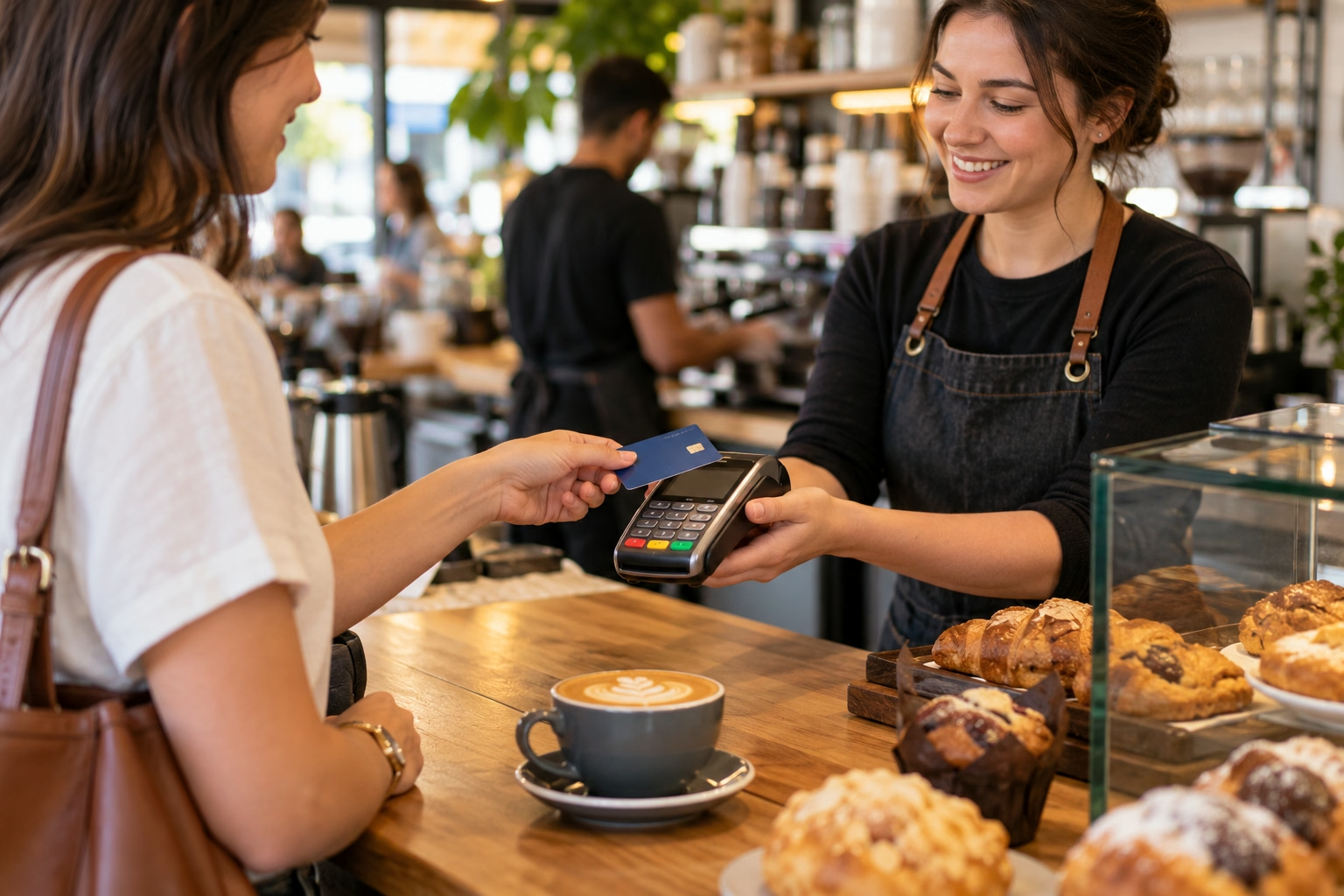
According to the Australian Bureau of Statistics’ Food Services report (March 2026), fast-casual restaurants grew revenue by 19% year-on-year, while fine dining grew by just 3%. Fast-casual now accounts for 34% of all restaurant spending in Australia, up from 22% in 2020. The full dataset is available at https://www.abs.gov.au/. Chains like Betty’s Burgers and Fishbowl have expanded rapidly, but the real drivers are independent operators who can pivot menus quickly based on local preferences.
The Experience Economy Takes Over
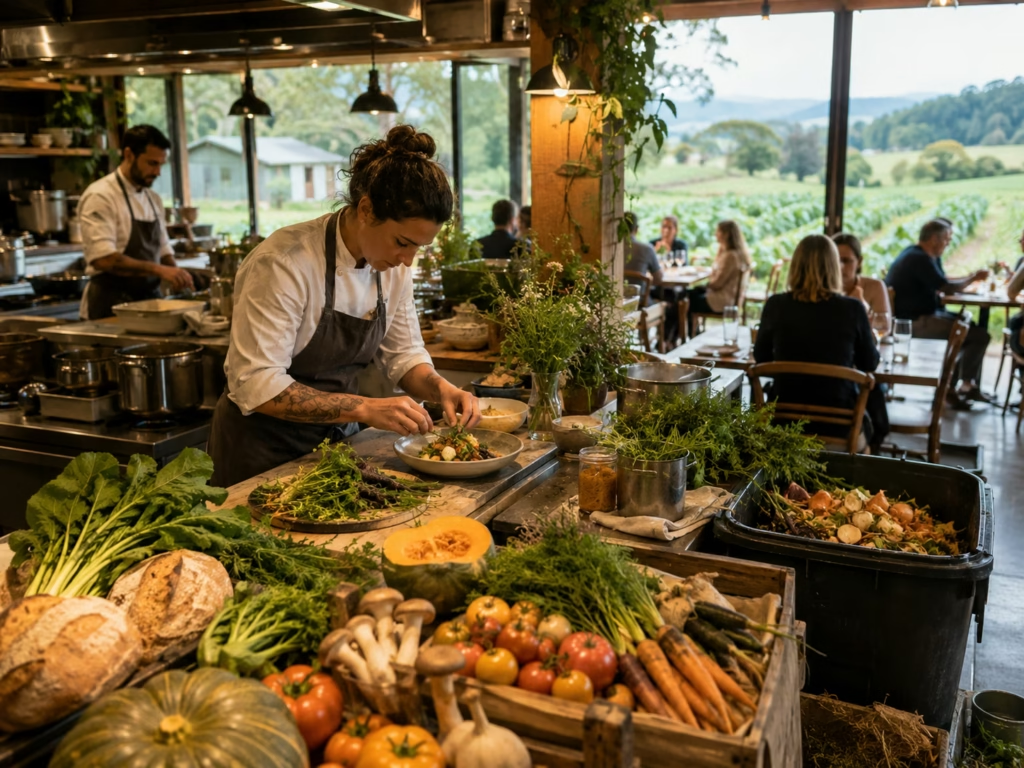
At the other end, experiential restaurants are thriving by offering something that cannot be replicated at home. Melbourne’s “Dinner in the Dark” concept, where guests eat in complete darkness served by visually impaired waitstaff, has a three-month booking lead time. Sydney’s “Theatre Kitchen” combines a six-course tasting menu with live performance art. These venues charge premium prices but attract a demographic that values stories over status. In 2026, 41% of Australians aged 25–40 say they choose restaurants based on “experience potential” rather than cuisine type.
Why Casualisation Is Winning
The shift toward casual and experiential dining is driven by three factors. First, economic pressure: diners are more price-conscious after years of inflation, and fast-casual offers perceived value without sacrificing quality. Second, time poverty: the average Australian now spends 22% less time on meals than in 2019. Third, social media: fast-casual brands are built for Instagram, with custom packaging, bold colours, and photogenic food presentation. “If a burger doesn’t get 500 likes, it doesn’t exist,” jokes a Brisbane restaurant consultant.
Implications for Traditional Restaurants
Full-service restaurants are not disappearing, but they are being forced to adapt. Many now offer fast-casual lunch menus to capture daytime traffic, then pivot to premium experiential dinners. The most successful operators treat the two models as complementary, not competing. The losers are those who attempt to do both half-heartedly. In 2026, the Australian restaurant industry rewards clarity: be fast or be unforgettable.