Australian Resource Stocks Under Pressure: Costs, ESG Rules and Mining Project Risks Explained
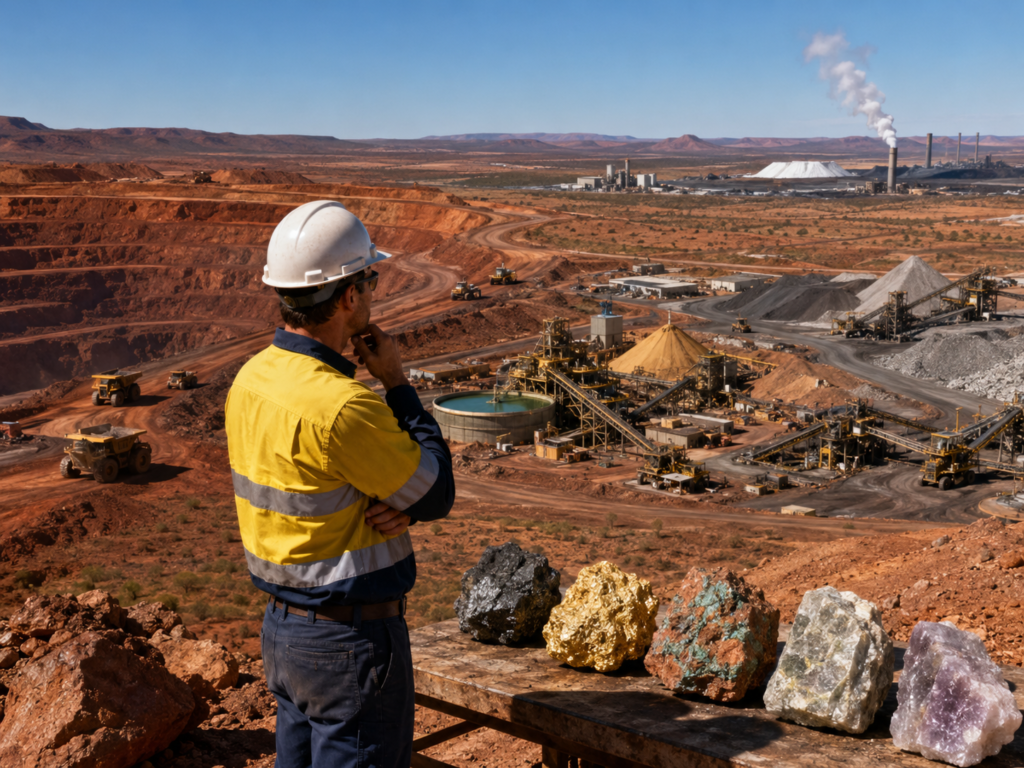
Investors often assume that rising commodity prices will automatically lift mining shares. In practice, shareholder returns depend on how efficiently management converts revenue into sustainable cash flow.
A producer can benefit from higher gold, iron ore or copper prices while simultaneously facing wage inflation, lower ore grades, equipment shortages and expensive project delays. These pressures can reduce margins and weaken dividend capacity.
The Australian Bureau of Statistics publishes Mineral and Petroleum Exploration data, helping investors assess trends in exploration spending and industry activity.
Cost Inflation Is a Major Valuation Risk
Mining is highly dependent on diesel, electricity, explosives, heavy equipment and specialised labour. Remote operations may also require company-funded roads, accommodation, air transport and water infrastructure.
When labour markets tighten, contractors can demand higher rates. When energy prices rise, processing and transportation costs increase.
Investors should compare reported production costs across several periods. A company that repeatedly raises its cost guidance may be facing structural challenges rather than temporary inflation.
Ore Grade and Mine Complexity
Declining ore grades can require miners to process more material to produce the same amount of saleable product. This raises energy consumption, waste movement and equipment use.
A mature mine may still hold large reserves, but extracting those reserves can become progressively more expensive. Reserve size should therefore be considered together with grade, recovery rates and strip ratios.
Environmental Standards Affect Capital Requirements
Australian mining companies must manage land disturbance, water use, rehabilitation and emissions. These obligations can increase upfront costs but may also reduce long-term legal and operational risks.
Investors increasingly examine closure provisions and rehabilitation liabilities. A mine’s accounting value may not fully reflect the cash required to restore the site after production ends.
Coal producers face additional uncertainty because climate policies, financing restrictions and customer decarbonisation plans can affect long-term demand. Nevertheless, supply constraints can occasionally support coal prices, producing strong cash flow even as the sector faces strategic pressure.
Royalties and Tax Policies Can Change Economics
Mining companies pay royalties to state governments, generally based on production value or volume. Changes to royalty structures can materially affect project returns.
Investors should not assume that a high commodity price will flow directly to shareholders. Taxes, royalties, sustaining capital and community commitments all compete for the same cash flow.
Political risk in Australia is lower than in many mining jurisdictions, but regulatory settings can still change as governments respond to budget requirements, environmental concerns or community expectations.
Project Execution Separates Winners from Losers
New mines and processing plants can experience cost overruns, construction delays and technical problems. These risks are especially important for lithium refining, rare earth separation and other complex downstream projects.
A company may have a valuable resource but lack the engineering expertise required to deliver a processing facility on time.
Investors should review management’s historical record. Teams that consistently meet guidance and control capital expenditure deserve greater credibility than companies relying on promotional forecasts.
A More Disciplined Investment Approach
Mining analysis should combine commodity forecasts with operating evidence. Key indicators include cost guidance, production reliability, reserve quality, rehabilitation obligations and return on invested capital.
The most attractive resource stock is not necessarily the company with the largest deposit or fastest production growth. It may be the operator that allocates capital carefully, maintains a strong balance sheet and avoids destroying value at the top of the commodity cycle.