Australian Quantum Startups in 2026: Real-World Breakthroughs in GPS-Free Navigation, Smart Energy and Next-Generation Computing

Quantum Technology Is Finding Practical Applications in Australia
Australia’s quantum startup industry is entering a new phase as companies attempt to translate sophisticated scientific discoveries into technologies capable of addressing practical challenges.
Although quantum computing frequently attracts attention for its potential to transform scientific calculations, several Australian businesses are pursuing applications that could deliver value before large-scale quantum computers become available.
These include navigation systems that function without GPS, specialised processors for energy management and semiconductor technologies that may eventually complement conventional computing.
Developments throughout 2026 demonstrate an increasingly application-focused approach to quantum commercialisation.
Rather than measuring progress solely through laboratory achievements, companies are beginning to evaluate performance under operating conditions relevant to potential customers.
Q-CTRL Demonstrates Navigation Without Satellite Signals
One notable example comes from Sydney-based quantum technology company Q-CTRL.
In August 2026, the company announced a maritime field demonstration involving navigation without GPS.
During trials conducted in the Coral Sea, its technology used quantum gravity measurements to identify variations in the Earth’s gravitational field.
By comparing those measurements with geographic gravity information, the system supported independent vessel positioning.
Q-CTRL reported an accuracy of approximately one nautical mile during the trial.
According to the company’s August 27, 2026 technical announcement, the demonstration represents progress toward navigation systems designed for environments where satellite signals are compromised.
The technology could have applications in maritime transport, aviation and defence, although broader deployment will require additional operational validation.
This illustrates how quantum sensing may reach specific commercial markets earlier than general-purpose quantum computing. Q-CTRL
Diraq Explores Quantum Computing Within Existing Infrastructure
Australian startup Diraq is taking a different approach by developing silicon-based quantum processors.
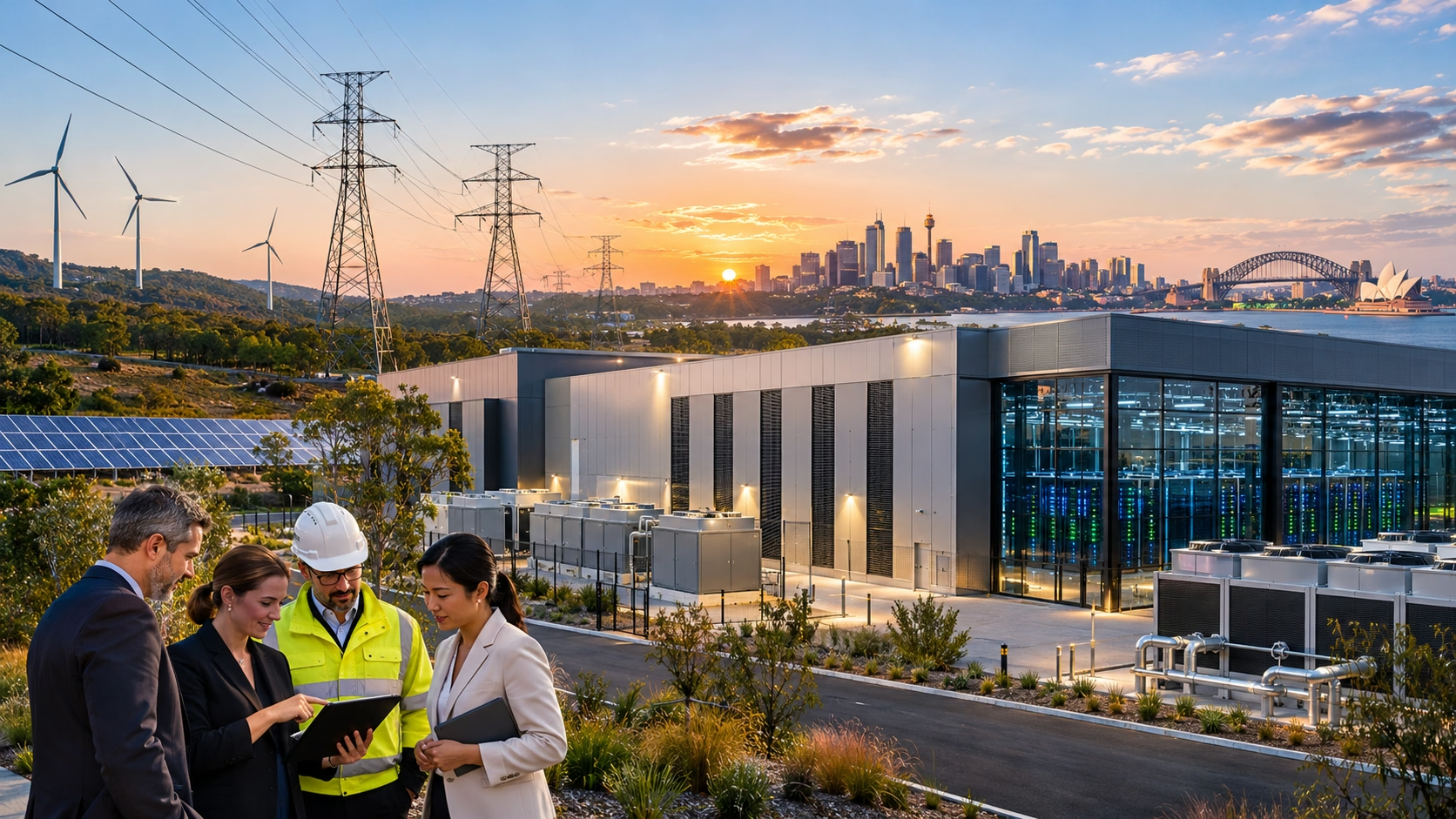
In September 2026, the company announced plans to install an eight-qubit quantum computing system at an Equinix commercial data centre in Sydney.
The installation is designed to integrate cooling equipment, control electronics and quantum hardware within existing digital infrastructure.
Its projected electricity consumption is below 20 kilowatts.
The collaboration provides an opportunity to study how quantum processors can operate alongside cloud computing platforms, conventional servers and AI systems.
However, the initial installation is primarily intended to validate infrastructure integration rather than deliver commercially transformative computing power. Equinix Newsroom
Government Funding Targets Energy and Healthcare
Federal investment is supporting additional quantum applications.
On October 2, 2026, Australia announced AUD 12.3 million in funding for six projects under the Critical Technologies Challenge Program.
Silicon Quantum Computing received AUD 3.6 million to develop quantum-enhanced AI technology with Schneider Electric and the University of New South Wales.
The project aims to improve energy demand forecasting and renewable power integration.
Other recipients include QuantX Labs, which is developing advanced timing technology for electricity networks, and Avicena Systems, which is working on quantum biosensing for border inspections.
These investments demonstrate the potential relevance of quantum technology to everyday industrial operations. minister.industry.gov.au
Australia Builds Capacity for Future Quantum Markets
Australia is also expanding the physical infrastructure needed to manufacture and operate quantum technologies.
Quantum Brilliance opened a commercial quantum diamond foundry in Melbourne in November 2025.
In June 2026, PsiQuantum began construction of its proposed utility-scale computing facility in Queensland’s Moreton Bay region.
Together, these initiatives illustrate the industry’s broader development, encompassing specialised materials, sensors, computing hardware and advanced facilities.
The major commercial challenge remains demonstrating reliability, cost-effectiveness and advantages over established technologies.
For Australia’s quantum startups, success will depend on translating promising scientific performance into systems that industries can purchase, maintain and use consistently.