How IoT Is Advancing Connectivity and Business Innovation in Australia

The development of the Internet of Things in Australia is reshaping the relationship between technology, infrastructure, and business performance. IoT allows physical objects to become part of a digital ecosystem by using sensors, software, and connectivity. These connected devices generate data that can be used to monitor activities, automate tasks, improve services, and support better decisions. In Australia, IoT is gaining momentum because it directly addresses many of the country’s economic and geographic challenges.
A key factor behind IoT adoption is the need for stronger connectivity across both metropolitan and regional areas. Australia’s economy depends heavily on industries that operate outside major cities, including agriculture, mining, logistics, utilities, and energy. In these sectors, decision-makers often need reliable information from distant locations. IoT makes this possible by connecting assets and environments that were once difficult to supervise. A water tank, a delivery truck, a solar panel, or a mining vehicle can now send data continuously to a central platform.
In agriculture, IoT is helping producers manage land and resources with greater accuracy. Sensors placed in soil can measure moisture and nutrient levels, while weather stations can provide local climate data. Drones, connected cameras, and livestock tracking devices can also support farm management. These tools allow farmers to reduce unnecessary water use, detect problems earlier, and improve productivity. For a country where drought and climate uncertainty can strongly affect food production, IoT offers practical support for resilience and sustainability.
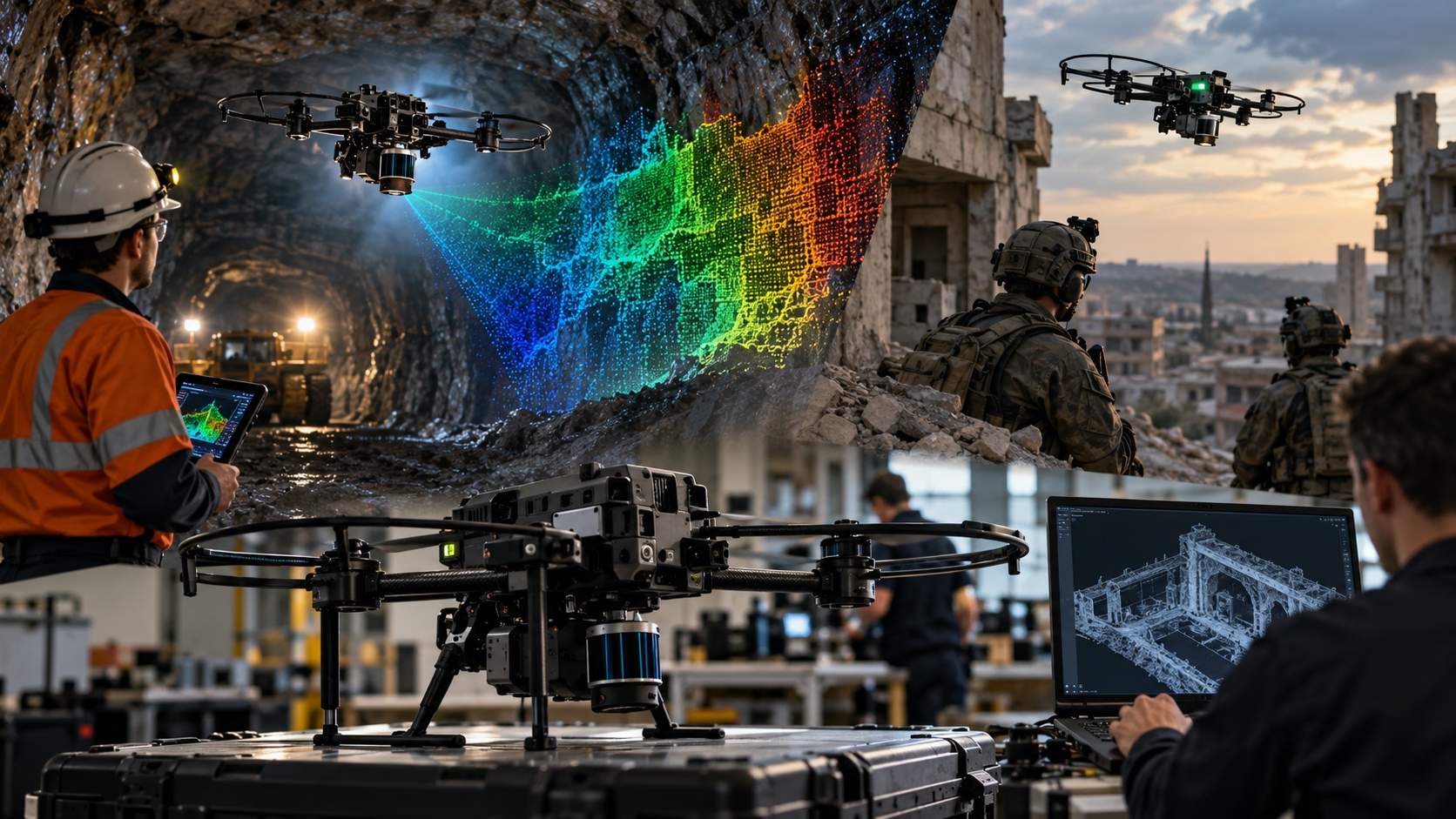
The mining industry is another area where IoT has strong potential. Australian mining companies use advanced technologies to monitor equipment, improve safety, and increase productivity. IoT sensors can track the condition of machinery, detect possible failures, and provide information about underground or remote environments. When combined with automation, IoT can reduce the need for workers to enter dangerous areas. This improves safety while allowing companies to maintain more consistent operations.
IoT is also changing how Australian businesses understand customers and manage supply chains. Retailers can use connected systems to monitor stock levels, track refrigeration units, and analyse customer behaviour. Transport companies can follow vehicle locations, improve route planning, and monitor driver performance. In cold-chain logistics, IoT sensors help ensure that food, medicine, and other sensitive goods remain within safe temperature ranges. These applications improve reliability and help businesses maintain quality standards.
In urban areas, IoT contributes to smart city development. Local councils and state governments can use connected infrastructure to manage traffic, lighting, water, waste, and environmental quality. Smart meters help monitor electricity and water usage, while air quality sensors can provide useful information for public health and planning. These systems help cities respond more efficiently to population growth and environmental pressure.
The rise of IoT also creates new business models. Companies can shift from selling only products to offering ongoing services based on data. For example, a machinery supplier may provide performance monitoring as part of its customer support. An energy company may offer insights that help households and businesses reduce consumption. This service-based approach can create stronger customer relationships and recurring revenue.
Still, IoT is not without risk. Security must be a priority because connected devices can be vulnerable if they are poorly managed. Organisations need strong authentication, regular updates, network protection, and clear data policies. Skills are also important. Businesses must have employees who understand data analysis, cybersecurity, cloud platforms, and device management.
IoT’s continued growth in Australia will depend on reliable networks, trusted systems, and practical business value. When used effectively, it can connect remote operations, improve productivity, support sustainability, and help Australian organisations compete in a more digital economy.