Policy Meets Capital: Australia’s 2026 Space Strategy and the Startup Boom
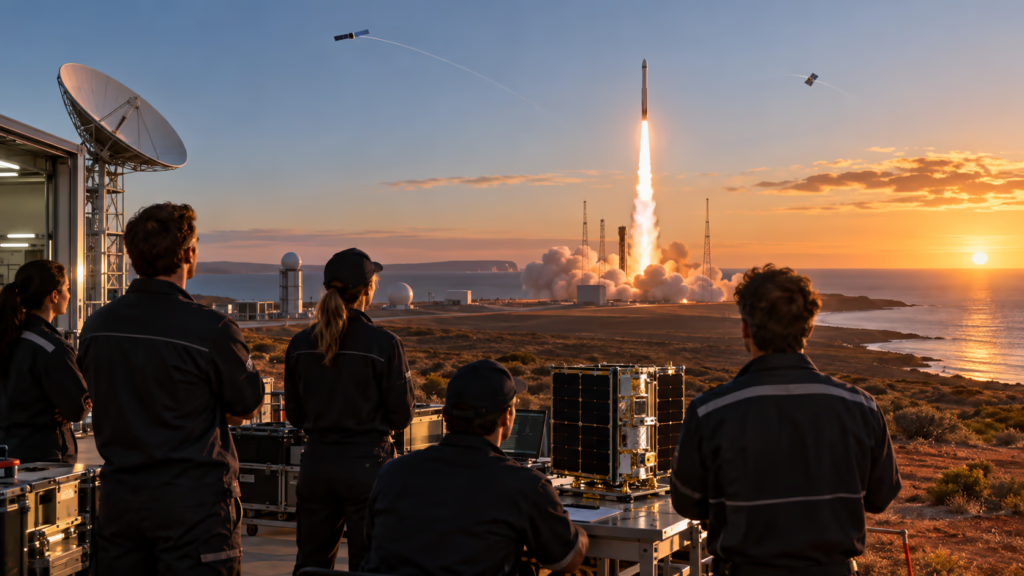
Australian space policy has moved from aspiration to execution in 2026. The combination of targeted public investment, a clear strategic framework, and a maturing startup ecosystem is reshaping the nation’s role in the global space economy. What was once a patchwork of grants and research programs has become a coordinated effort to build sovereign capability in launch, satellites, and space-enabled data.
The most tangible expression of this policy is the National Reconstruction Fund Corporation. In 2026, the NRF invested $75 million in Gilmour Space Technologies as part of a $217 million Series E round, and $10 million in Southern Launch as part of a $25 million Series A round. These are not small bets. They are strategic investments in companies that can deliver launch services, satellite manufacturing, and re-entry capabilities from Australian soil. The NRF’s involvement signals that the government sees space as critical infrastructure, not a novelty.
The Australian Space Agency’s official portal (https://www.australianspaceagency.gov.au/) provides the data and coordination that underpins this strategy. Its 2026 reporting highlights satellites and multi-orbit constellations as core platforms, with launch and re-entry as key growth areas. The agency works alongside the Department of Industry, Science and Resources, Defence, and state governments to align funding, regulation, and infrastructure. For startups, this means fewer dead ends and more clear pathways to commercialisation.
The government’s Statement on Space, released in July 2026, is the clearest articulation of national ambition to date. It outlines a vision for an enduring space sector, built on sovereign capability, international partnerships, and a skilled workforce. The statement emphasises dual-use technologies—those that serve both commercial and defence needs—as a priority. This has implications for startups. Companies that can demonstrate relevance to defence, communications, or Earth observation are more likely to attract public funding and government contracts.
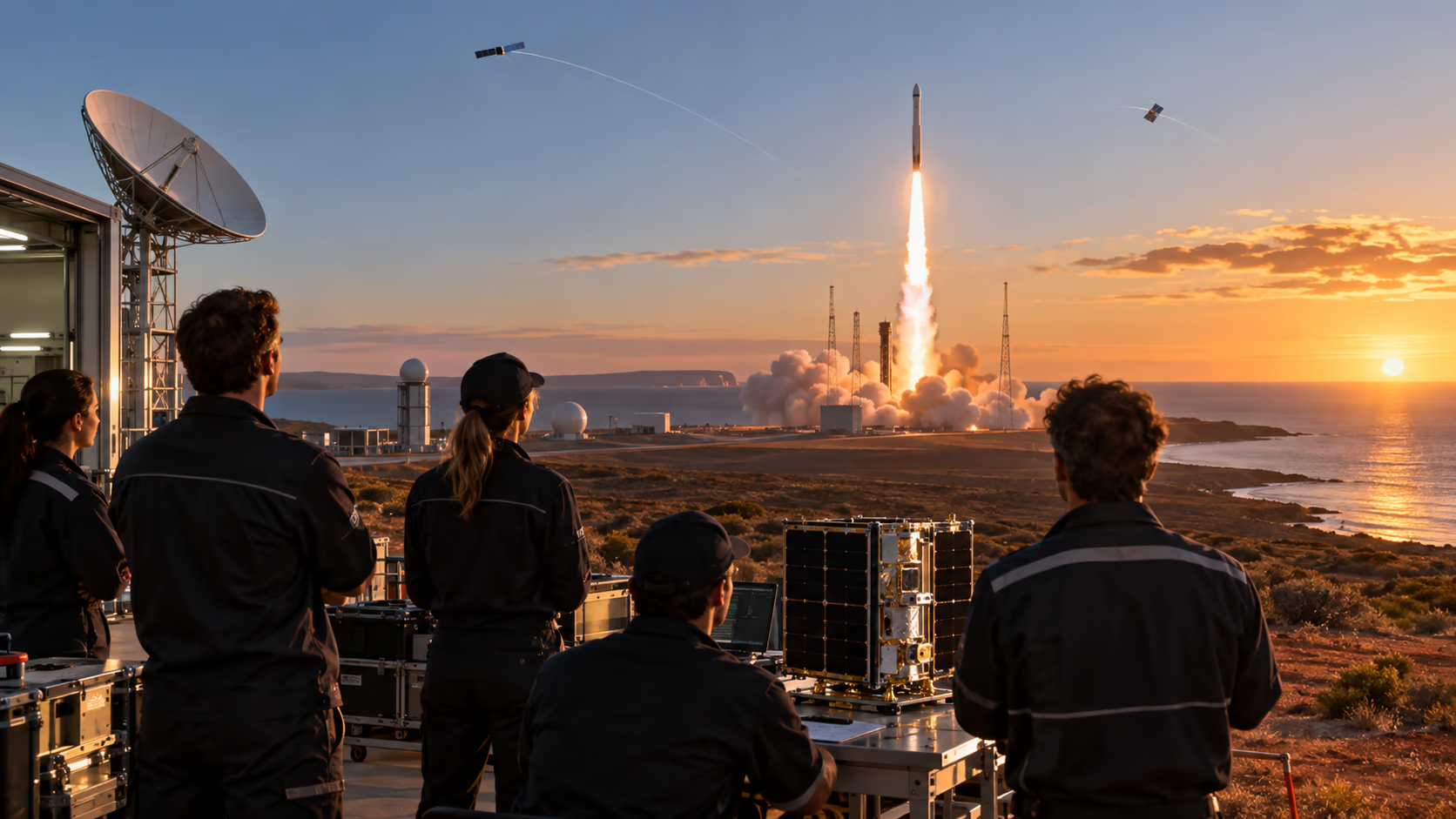
The startup ecosystem is responding. Gilmour Space is scaling production of the Eris rocket and ElaraSat satellite bus. Southern Launch is operating the Koonibba Test Range and Whalers Way Orbital Launch Complex, and has supported multiple commercial re-entries, including the Varda W-6 capsule in May 2026. Myriota is expanding its direct-to-satellite IoT network. Dozens of smaller firms are working on propulsion, materials, sensors, and software. The Venture Catalyst Space program at Adelaide University’s Innovation & Collaboration Centre selected eight new startups for its 2026 cohort, covering microgravity research, climate risk, advanced materials, and space-enabled data solutions. Since 2018, the program has supported 54 startups, helping them raise up to $135 million.
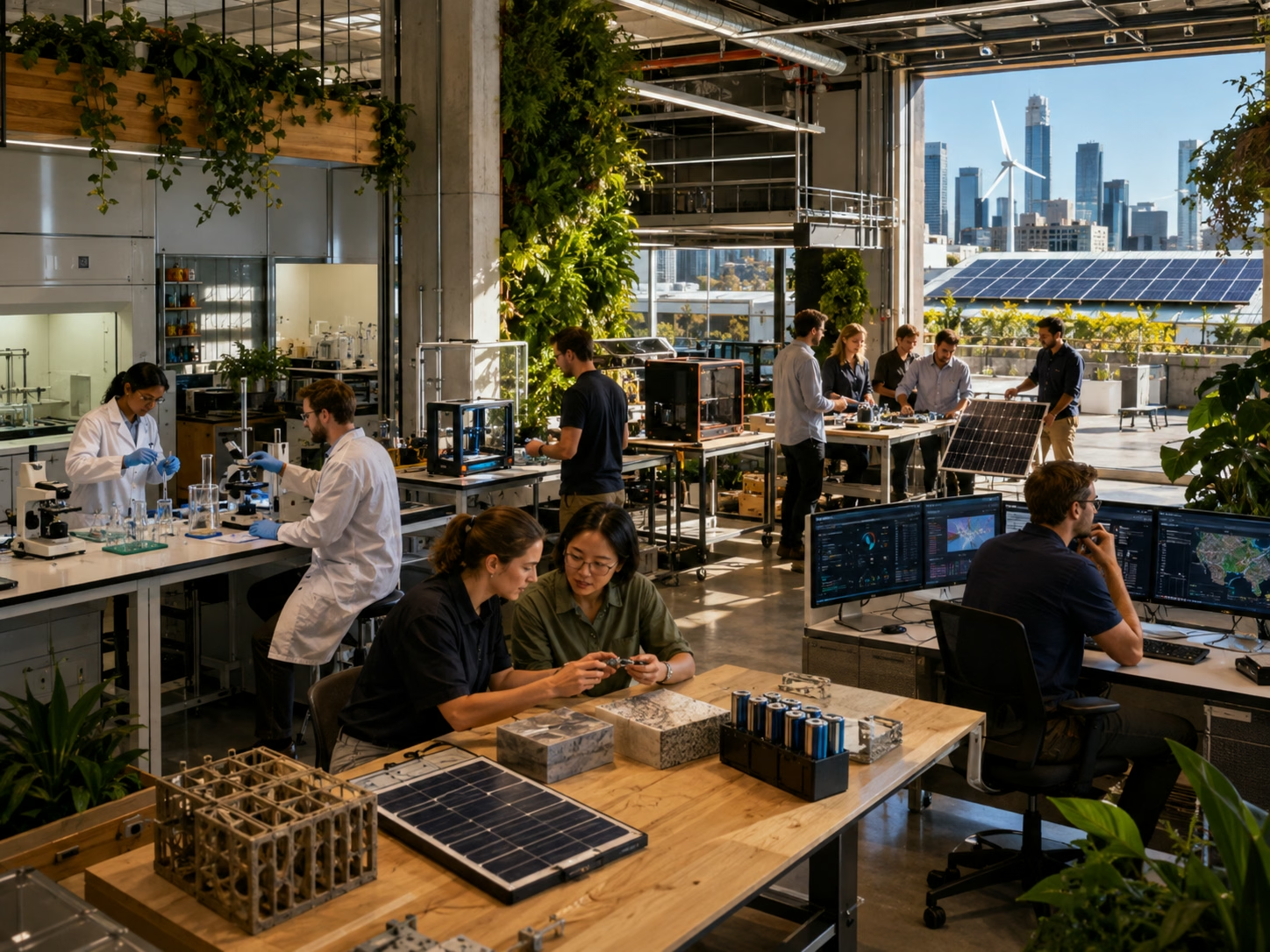
Policy and capital are not the only ingredients. Australia’s space sector benefits from strong research institutions, including the University of Adelaide, UNSW Canberra, and RMIT. It also benefits from geography: vast, sparsely populated areas suitable for launch and ground stations, and a location that supports polar and equatorial orbits. The Koonibba Test Range, co-managed with the Koonibba Community Aboriginal Corporation, demonstrates how space infrastructure can be developed with Indigenous partnership and social licence.
Challenges remain. Australia still lacks a large domestic market for launch services. It must compete with established providers in the United States, China, and New Zealand. It needs to retain engineering talent and build secure supply chains. But the policy framework is now in place. The National Reconstruction Fund, the Australian Space Agency, and the Statement on Space have created a coherent strategy that links public investment to sovereign capability. For startups, the message is clear: if you can build, launch, or operate space technology in Australia, the capital and political will are there. In 2026, that combination is producing results.