Australia’s Game Industry Talent Race: Skills, Studio Growth and the Future of Creative Employment
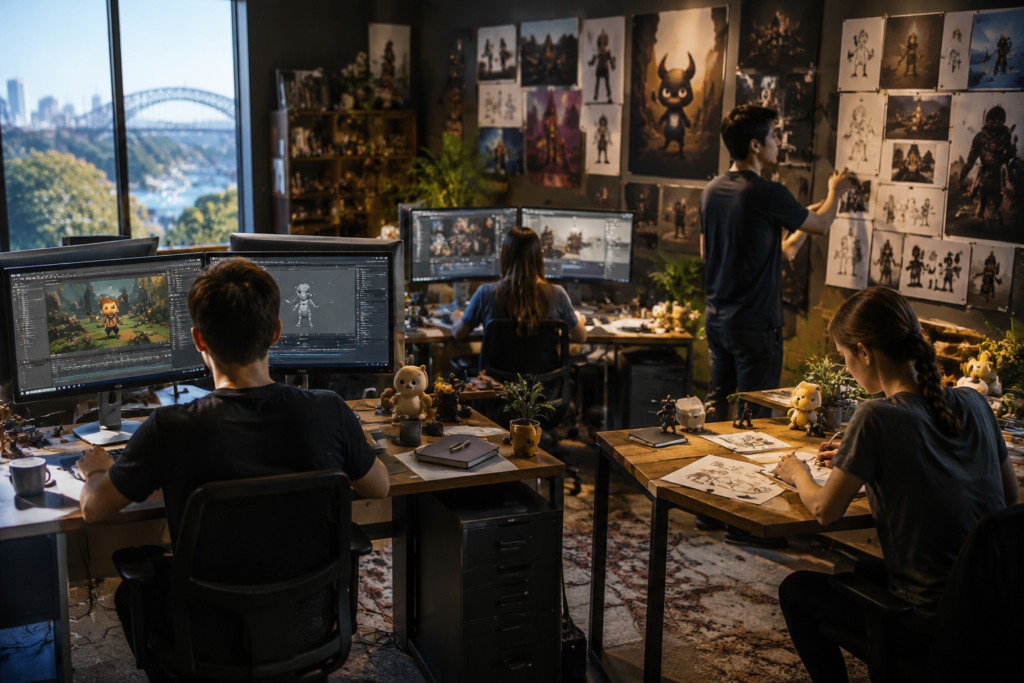
Australia’s game-development opportunity depends on more than investment and original ideas. Studios also need experienced people who can turn ambitious concepts into stable, market-ready products. As the industry expands, access to specialized talent is becoming one of its most important strategic issues.
Game production requires a combination of creative and technical disciplines. These include gameplay programming, engine development, technical art, animation, user-experience design, production management, writing, sound, quality assurance, data analysis, community management, and marketing. A studio may have an excellent concept but still fail if it cannot recruit the right production leadership or technical expertise.
Small Studios Need Multidisciplinary Workers
Australian startups often operate with compact teams, meaning employees may perform several roles. A designer might also manage documentation and community feedback. An artist may work across concept development, animation, interface assets, and marketing materials.
This flexibility can create valuable learning opportunities, but it can also result in overwork or unclear responsibilities. Sustainable studios need realistic milestones, documented production processes, and managers who understand the uncertainty involved in game development.
Screen Australia’s official Games funding and support page illustrates the broader role of public programs in helping Australian developers advance projects and strengthen production capability.
Funding can support a game, but workforce development requires longer-term action. Universities, vocational institutions, studios, professional associations, and government agencies need to create clearer pathways from education to commercial production.
Experience Is Difficult to Replace
Entry-level talent is important, but studios also need senior producers, lead programmers, technical directors, art directors, and experienced designers. These professionals make decisions that affect budgets, schedules, performance, certification, and team health.
Australia competes internationally for such workers. Remote employment allows experienced developers to work for overseas companies without leaving the country, while Australian studios can recruit specialists from other regions. This flexibility expands opportunity, but it also increases salary competition.
Studios that cannot match the compensation offered by global companies may need to compete through creative ownership, flexible working conditions, meaningful responsibilities, profit-sharing arrangements, or strong workplace culture.
Successful Games Can Strengthen the Talent Pipeline
Projects such as Hollow Knight, Untitled Goose Game, and Cult of the Lamb have done more than generate sales. They have demonstrated that internationally recognized games can be produced by Australian teams.
Visible success encourages students and early-career professionals to view game development as a credible career. It also gives experienced workers an incentive to remain in Australia or return after working abroad.
However, one successful release cannot provide permanent employment for an entire team. Studios need follow-up projects, financial reserves, and development pipelines that reduce the gap between productions.
Artificial Intelligence and New Production Tools
Generative artificial intelligence and automated development tools are changing parts of game production, but they do not remove the need for skilled creative direction. Studios must consider copyright, licensing, training-data transparency, platform policies, artistic consistency, and employee concerns before integrating these systems.
The more practical opportunity may be using automation for repetitive testing, production support, documentation, localization assistance, or rapid prototyping under human supervision.
Entering 2026, Australia’s competitive position will depend on its ability to retain expertise. A healthy industry needs not only new startups but also experienced teams capable of completing projects, mentoring junior staff, managing international partners, and building companies that survive between releases.