How Australia’s Massive Superannuation Pool Shapes Markets, Infrastructure and Investment in 2026

For an individual worker, superannuation may appear to be a personal retirement account. At the national level, it is something much larger: one of Australia’s most important pools of investment capital.
Years of compulsory contributions have created a system managing trillions of Australian dollars. The scale can be tracked through the Australian Prudential Regulation Authority’s Quarterly Superannuation Statistics.
By 2026, the economic role of super is increasingly difficult to separate from the broader investment landscape.
How Individual Contributions Become Institutional Capital
The process begins with millions of relatively small payments.
Employers contribute to workers’ super accounts. Funds pool that money and invest it across large portfolios. Those portfolios may include listed companies, government and corporate bonds, property, infrastructure, cash and international assets.
The result is a transformation of household retirement savings into institutional investment capital.
Scale changes what funds can invest in
An individual investor can easily buy shares or exchange-traded funds. Purchasing a major infrastructure asset is far more difficult.
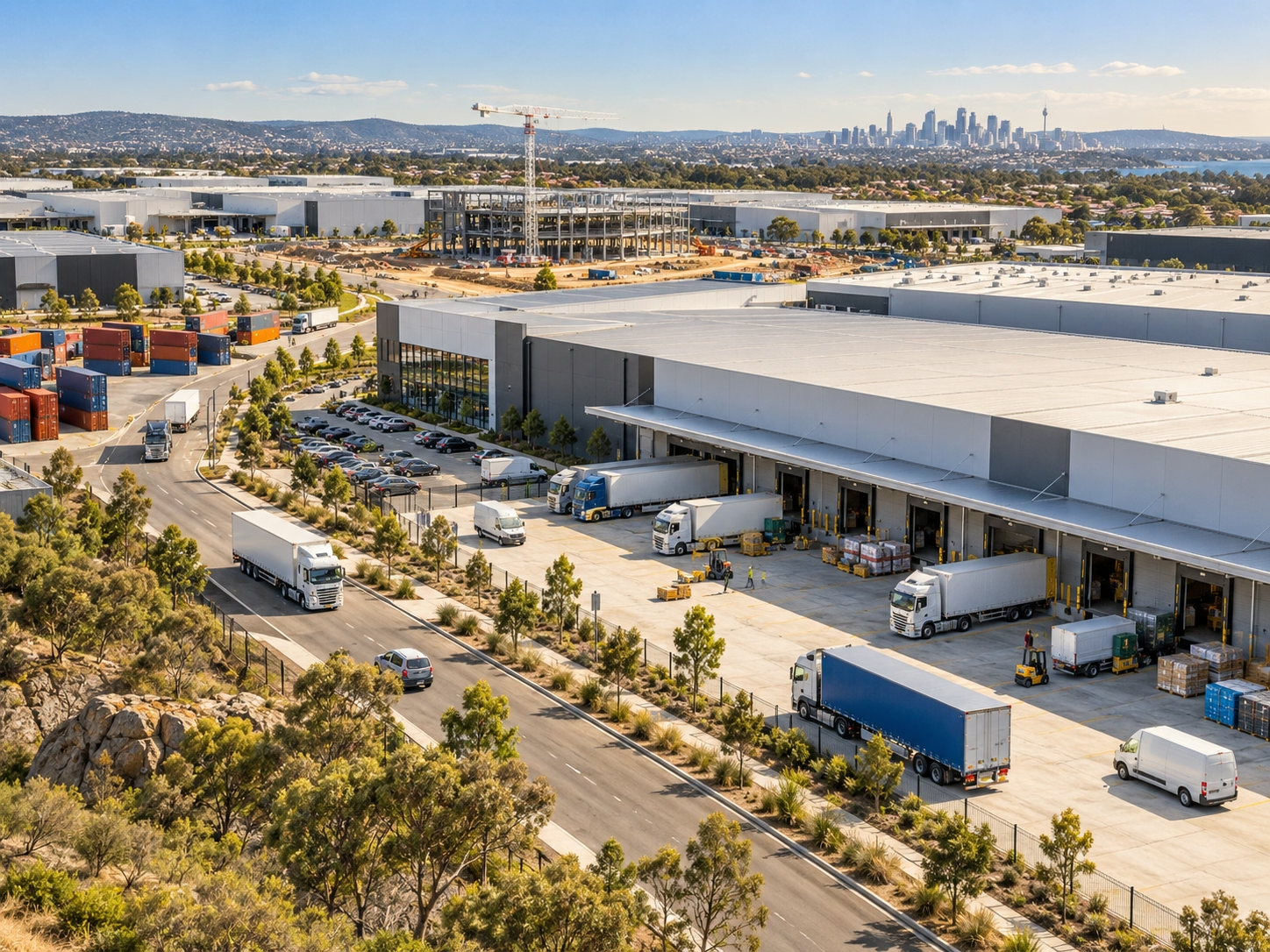
Large super funds can potentially participate in assets such as airports, energy networks, data infrastructure, commercial property and private markets, depending on their mandates and investment strategies.
These investments can provide diversification and long-term cash flows, although they also carry risks including valuation uncertainty and lower liquidity.
The 2026 Debate Is About More Than Returns
As the system grows, super funds face competing expectations.
Members want competitive risk-adjusted returns and reasonable fees. Governments and communities may also see large pools of retirement capital as potential sources of funding for national priorities.
These goals can overlap, but they are not automatically identical.
A project may deliver an attractive commercial return and support economic development. Another project may be socially desirable but fail to meet the investment requirements of a fund acting for members.
That distinction matters.
The primary investment purpose of superannuation assets is to support members’ retirement outcomes within the legal and fiduciary framework governing funds.
A Real-World Context: Infrastructure and the Energy Transition
Australia faces long-term capital requirements across energy, transport, housing-related infrastructure and digital systems.
Large super funds can be natural investors in projects with long operating lives because retirement portfolios also have long investment horizons.
Yet long-term does not mean low-risk.
Infrastructure projects can face construction delays, regulatory changes, political disputes and shifting demand. Private assets can also be harder to value than shares traded continuously on public exchanges.
For members, the central question is whether these investments improve portfolio diversification and expected risk-adjusted returns.
Super Funds Also Influence Public Markets
Large funds are significant shareholders in Australian and global companies.
That ownership can give institutional investors influence through voting, engagement with company boards and decisions about capital allocation.
This role creates another debate: how actively should super funds engage with corporate governance, climate risks and long-term business strategy?
The answer can affect both public policy discussions and members’ investment outcomes.
Why the Scale of Super Matters to Ordinary Workers
The national size of the system may seem remote from a member checking a mobile app.
Yet scale can influence the investments available, the fees that can be negotiated and the ability to access assets that individual investors may struggle to reach directly.
Scale can also create complexity. Large private-market portfolios require strong governance, transparent valuation and careful liquidity management.
In 2026, superannuation’s investment role is therefore operating on two levels at once.
For individuals, it is a mechanism for accumulating retirement wealth. For Australia, it is a major source of long-duration capital capable of influencing financial markets and real economic assets.
The system’s greatest challenge is ensuring those two roles remain aligned, with large-scale investment decisions ultimately serving the financial interests of members.