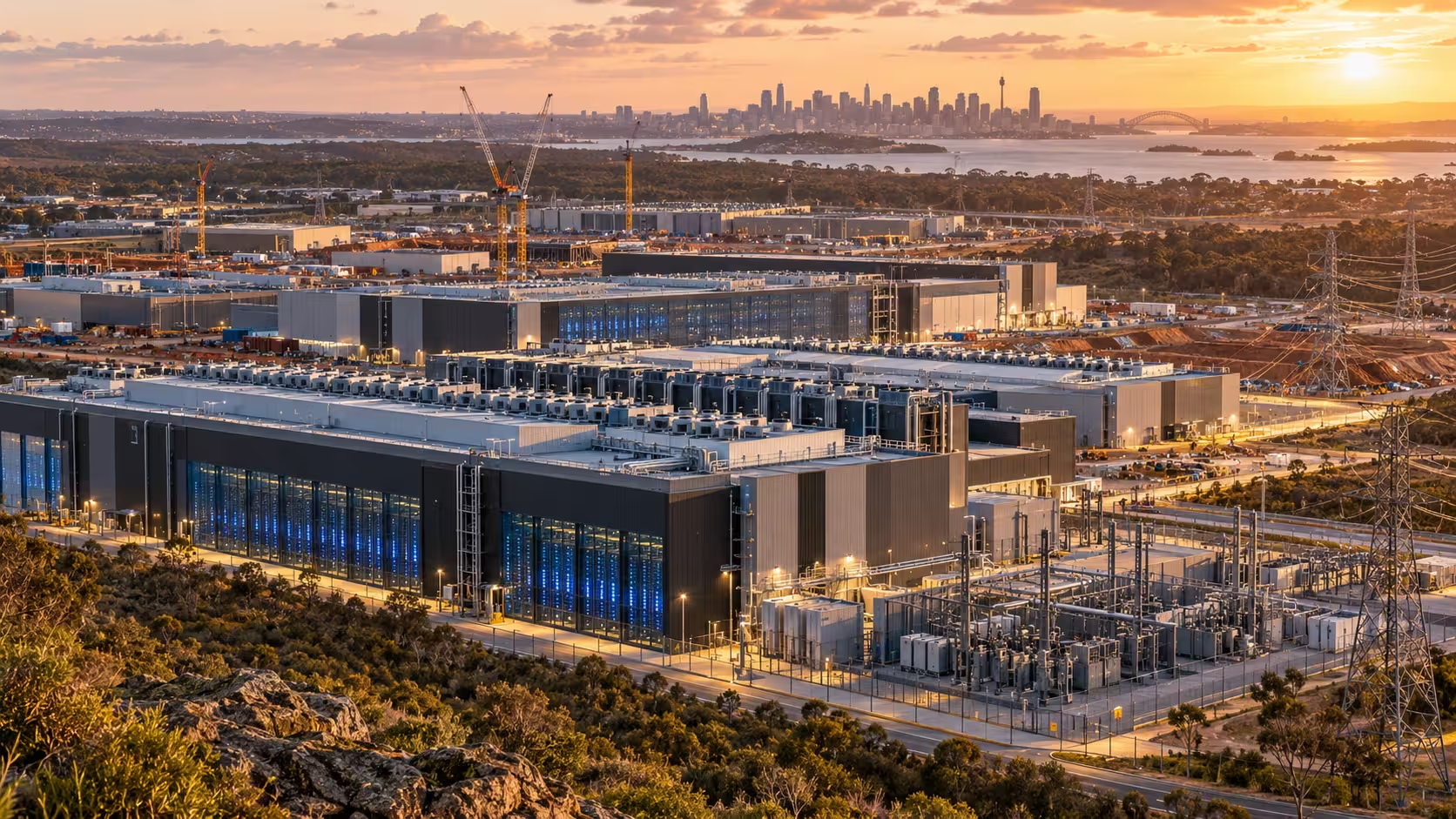
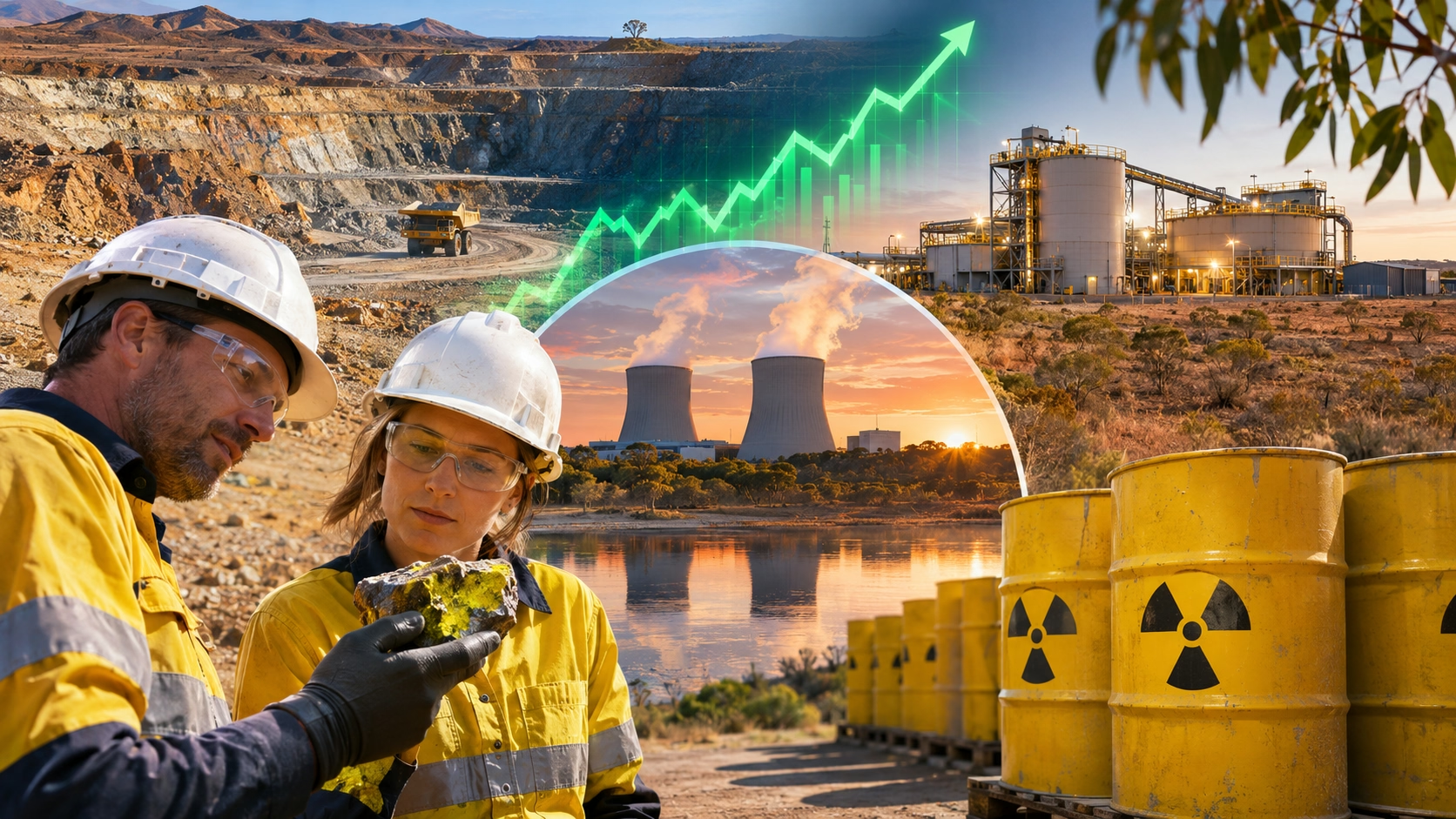
AI, Google, and Uranium: The New Demand Curve Driving ASX Stocks
The uranium trade has always depended on a demand story that unfolds over decades: reactors are built, utilities contract fuel, and mines take years to permit and construct. In 2026, a second demand curve has emerged that moves on a much faster clock—the electricity requirements of artificial intelligence data centres, and the willingness of technology companies to secure nuclear power directly.
The catalyst was visible in October 2026, when Google signed a long-dated power supply arrangement tied to Constellation Energy’s US nuclear fleet. ASX uranium stocks rallied almost immediately. Paladin Energy advanced 2.5%, Boss Energy rose 4.6% in its biggest intraday gain in over a week, and Deep Yellow moved higher alongside the producers. The move was not driven by any change in Australian uranium supply or policy. It was driven by the market’s recognition that a new class of buyer—large technology companies with decarbonisation mandates and near-limitless capital—was entering the nuclear power market as a direct counterparty.
Why Data Centres Change the Contracting Math
The significance for uranium equities lies in the structure of these deals. A hyperscaler signing a long-dated nuclear power agreement effectively underwrites the operating economics of a reactor, which in turn supports the utility’s ability to contract uranium on longer horizons. That is a different demand channel from traditional utility procurement, which has historically been cautious about locking in volumes too far ahead. Benchmark Mineral Intelligence notes that governments and technology companies are increasingly turning to nuclear power, and that around 430 reactors operate worldwide today, with demand expected to grow by roughly a third by 2035.
The AI narrative also explains why the ASX uranium rally of 2026 has been more resilient than previous sentiment-driven episodes. When Middle East tensions triggered a broad sell-off in risky assets in March, uranium stocks initially fell. But capital returned quickly, with portfolio managers pointing to AI capital expenditure as a bigger structural driver than short-term geopolitical risk. Guy Keller of Tribeca’s Nuclear Energy Opportunities Strategy described a “real resurgence on the tech and AI front,” while Perennial’s Sam Berridge argued that “the biggest driver for nuclear right now, even bigger than the Iran war, is the forward energy demand for AI”.
The ASX Names That Actually Benefit
Not every ASX uranium stock is equally exposed to the AI-driven demand curve. The clearest beneficiaries are producers and near-producers with uncontracted volumes that can be sold into a tightening term market. Paladin and Boss Energy sit in that category, and both have been singled out as liquid ways for Australian investors to express the theme. But the AI narrative also extends to explorers and developers with assets in stable jurisdictions and credible timelines, because the market is beginning to price a longer period of demand growth rather than a single contracting cycle.
The risk is that the AI demand story becomes overextended as a valuation justification. Data-centre electricity demand is real, but the path from a hyperscaler power purchase agreement to incremental uranium demand runs through reactor life extensions, uprates, and new construction—each with its own timeline. Investors who treat every ASX uranium headline as a direct AI beneficiary may find that the correlation breaks down when the next quarterly production report arrives. The more durable approach is to separate companies with actual pounds in the ground and a path to drumming them from those whose exposure to the AI theme is narrative rather than operational.