Seitec’s Stealth Sensing: The Canberra Startup Teaching Machines to See Without Being Seen
A 20-Year RAAF Veteran’s Frustration Becomes a Company
Daniel Stevens spent two decades as a RAAF avionics technician before founding Seitec in Canberra in 2021. The company did not begin with a market thesis; it began with a recurring operational failure. “Seitec started because existing sensors kept failing in environments where failure isn’t an option,” Stevens said. “Our technology gives defence and government agencies earlier detection and reduced risk”. That origin matters because it explains the product’s design centre: not maximum sensitivity at any cost, but persistent awareness without emitting.
In 2026, Seitec raised $4 million to expand the team, accelerate product development and push into global allied markets. The round was led by ACTivate Capital, which contributed $1.5 million, with support from specialist defence fund Beaten Zone Venture Partners and UNSW. ACTivate Capital chair Mick Cardew Hall described Seitec as the type of local startup the fund wants to back: globally competitive technology, early customer validation and export potential.
Passive Sensing in Contested Environments
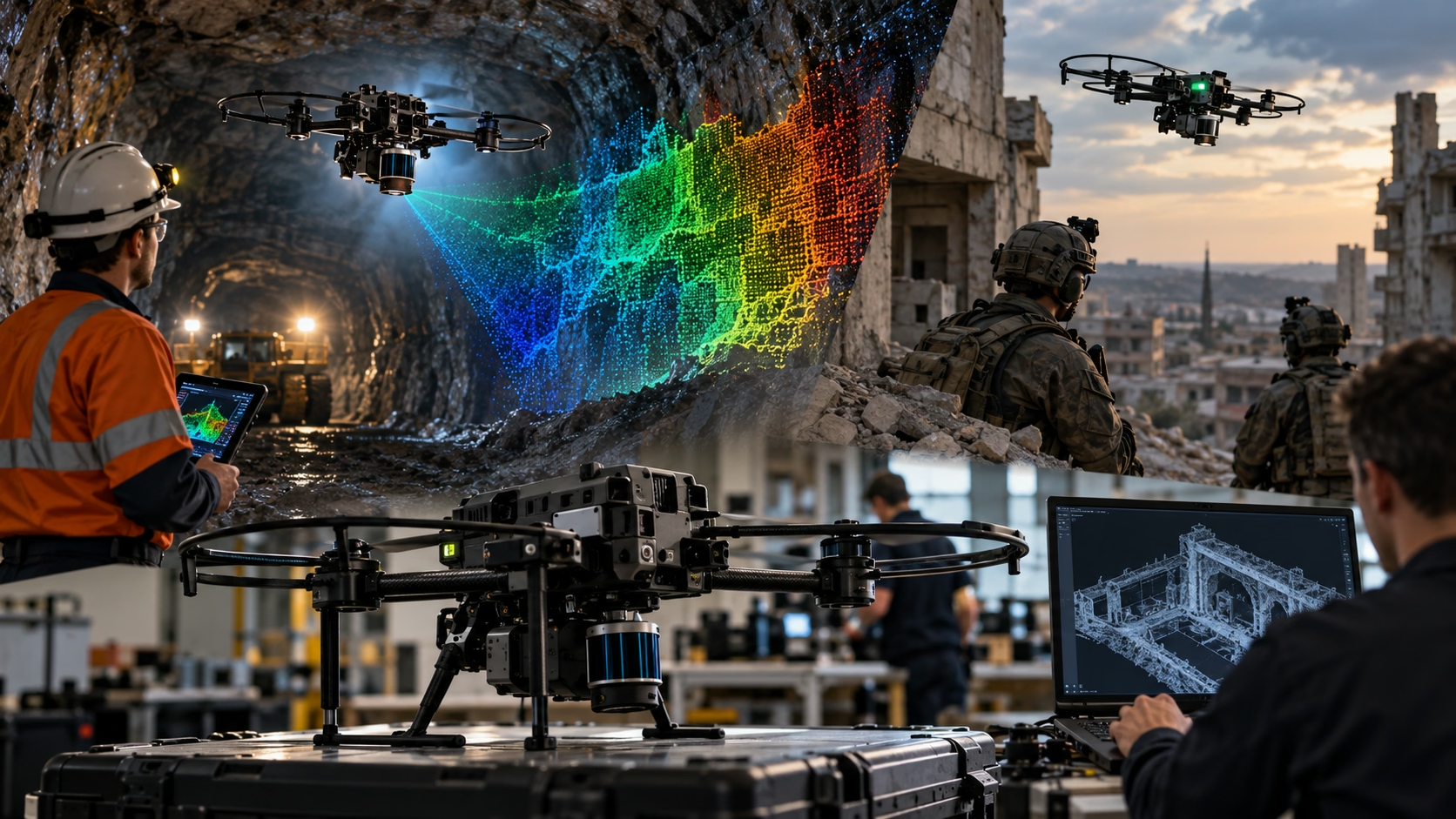
Seitec’s core technology is passive sensing: it detects, classifies and monitors activity in difficult and contested environments without giving away the user’s position. In practical terms, that means a military unit or critical-infrastructure operator can maintain awareness of movement or electromagnetic activity without switching on a radar or another active emitter that an adversary can detect, geolocate and target. The demand signal is coming not only from Australia but from allied nations that are confronting the same problem: how to see first in an environment saturated with sensors and precision weapons.
The defence use case spans force protection, base perimeter monitoring, intelligence, surveillance and reconnaissance support, and critical infrastructure security. The same passive approach can be applied to detect intrusions or anomalous activity around ports, pipelines, data centres and other assets where an active sensor might be undesirable for safety, security or diplomatic reasons. Stevens describes the company’s evolution as moving “from an Australian SME solving a Defence problem” into a “global-leading technology provider to defence, security and critical infrastructure sectors”.
The Capital Stack Behind Sovereign Sensing
Seitec’s raise is small by headline standards, but it reveals the maturing capital stack around Australian defence tech. ACTivate Capital is an ACT government-backed fund that has hit a $23 million first close on a $50 million target, explicitly aimed at turning Canberra research and innovation into global companies. Beaten Zone Venture Partners, meanwhile, is building a dedicated sovereign defence tech fund and has argued that Australia cannot rely on domestic demand alone to sustain the sector. That combination—territorial capital plus specialist defence capital—is designed to keep deep-tech companies anchored in Australia while giving them the runway to sell into AUKUS and Five Eyes markets.
The strategic logic is difficult to argue with. A passive sensor company founded by a former air-force technician, solving a problem he saw firsthand, is precisely the kind of bottom-up innovation that defence innovation programmes say they want. But the harder test is commercial: can Seitec convert allied demand into repeatable export contracts before larger primes absorb the niche? The $4 million round gives it time to answer that question, and the backing of ACTivate and Beaten Zone gives it networks that pure venture capital cannot provide.