Resilient Growth: How Australian Luxury Brands Are Expanding Despite Global Headwinds
Growth Against the Odds
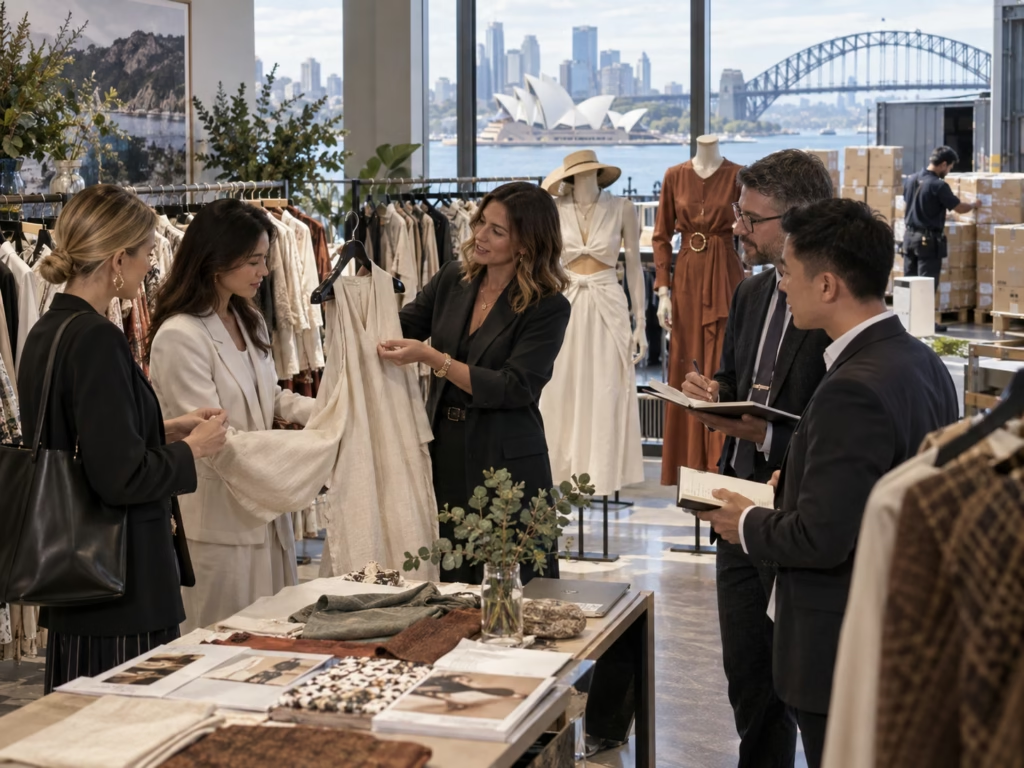
The global fashion industry entered 2026 facing significant headwinds: discretionary spending under pressure, supply chains reshaped by geopolitical instability, and the cost of capital rising. Yet Australian luxury and premium brands have defied these trends, posting substantial international growth through a combination of strategic diversification, product excellence, and operational discipline.
Leo Lin: 334% European Growth and a Harrods Milestone
Sydney-born luxury label Leo Lin reported 334.2% sales growth in Europe between FY25 and FY26, alongside persistent growth across the United States and the Middle East. The brand’s performance at Harrods—where it recorded a 91.45 per cent sales uplift through its ongoing wholesale agreement—demonstrates that Australian luxury design can compete at the highest levels of global retail.
The brand’s July 2026 pop-up at Harrods, its first physical retail activation in the UK, featured a curated edit of Pre-Fall and Fall-Winter 2026 collections in a space inspired by 1960s French cinema. Designer Leo Lin described the moment as “a dream come true,” adding that Harrods is “one of the most iconic retail destinations globally”.
Harrods’ head of buying noted that Leo Lin “offers modern silhouettes paired with playful yet elevated details, making it a perfect destination for summer event dressing”—a testament to the brand’s ability to translate Australian design sensibilities for a sophisticated international clientele.
Kivari: 42% Sales Growth and Strategic Infrastructure Investment
Queensland-born designer label Kivari recorded a 42 per cent increase in total sales in FY26, with double-digit growth across all key metrics. The brand operates 14 stores along Australia’s eastern states, is stocked in David Jones, Mode Sportif, and The Iconic, and has expanded its wholesale presence across the United States, Canada, Europe, Asia, and the Middle East.
In August 2026, Kivari relocated its headquarters to Rosebery, Sydney’s fashion hub, joining the likes of Camilla, Zimmermann, Rebecca Vallance, and White Fox. The expanded facility includes a larger showroom and creative studio, providing the infrastructure for continued scaling.
CEO Christina Hollingsworth framed the move as both practical and symbolic: “The numbers speak for themselves, but what they represent is even more exciting. The brand is resonating deeply with women around the world. The move to Rosebery gives us the infrastructure to meet this moment and build toward the next”.
Kivari is preparing to grow its store count to 18 across Australia by the end of FY27, starting with new locations in Miranda and Fortitude Valley.
The Zimmermann Benchmark
Zimmermann remains the benchmark for Australian luxury global expansion. In 2026, the brand continued its international store rollout with openings in Cancun, Boston, and Zurich, alongside renovations of its Sydney and Melbourne boutiques. The founder’s ability to draw creative inspiration from diverse sources—including eighties cinema—while maintaining a distinctively Australian design identity has made Zimmermann a template for aspirational Australian brands.
The Valuation Landscape
Zimmermann’s record-breaking valuation of more than $1.5 billion has reshaped expectations for what Australian fashion brands can achieve. Industry observers now speculate that brands like Aje, Smiggle, and Peter Alexander could be next in line for significant valuations, reflecting growing international appetite for Australian fashion assets.
What Sets Australian Luxury Apart
The common thread across these success stories is a commitment to product quality and design integrity that transcends geographic boundaries. Kivari’s signature prints and quality fabrications have built customer loyalty that the brand describes as “a defining strength”. Leo Lin’s focus on occasionwear with “playful yet elevated details” has found resonance in markets as diverse as London, Los Angeles, and Dubai.
Navigating Risk with Diversification
The Saks Global collapse served as a cautionary tale about wholesale concentration. However, the brands that have thrived in 2026 are those that built diversified distribution networks before the crisis hit. Leo Lin’s 150+ global stockists, Kivari’s multi-region wholesale presence, and Zimmermann’s direct-to-consumer retail expansion all reflect a strategic understanding that sustainable international growth requires multiple channels and multiple markets.
The Australian luxury fashion sector’s performance in 2026 demonstrates that premium design, operational discipline, and geographic diversification can overcome even the most challenging global conditions.