From Boat to Plate: How Australian Startups are Using Blockchain to Clean Up Seafood Supply Chains
Seafood is one of the most fraudulent food commodities in the world. Studies have consistently shown that a significant percentage of fish sold in markets is mislabeled. For Australian exporters competing on quality and sustainability, proving the authenticity of their product is a critical competitive advantage. This has led to a surge in startups focusing on “provenance tech”—using digital ledgers to create an unbreakable chain of custody.
Solving the Provenance Puzzle
The journey of a fish from the Southern Ocean to a high-end restaurant in Tokyo is complex. It changes hands multiple times: from the vessel, to the processor, to the exporter, to the importer. In the past, this paper trail was fragmented and easy to manipulate.
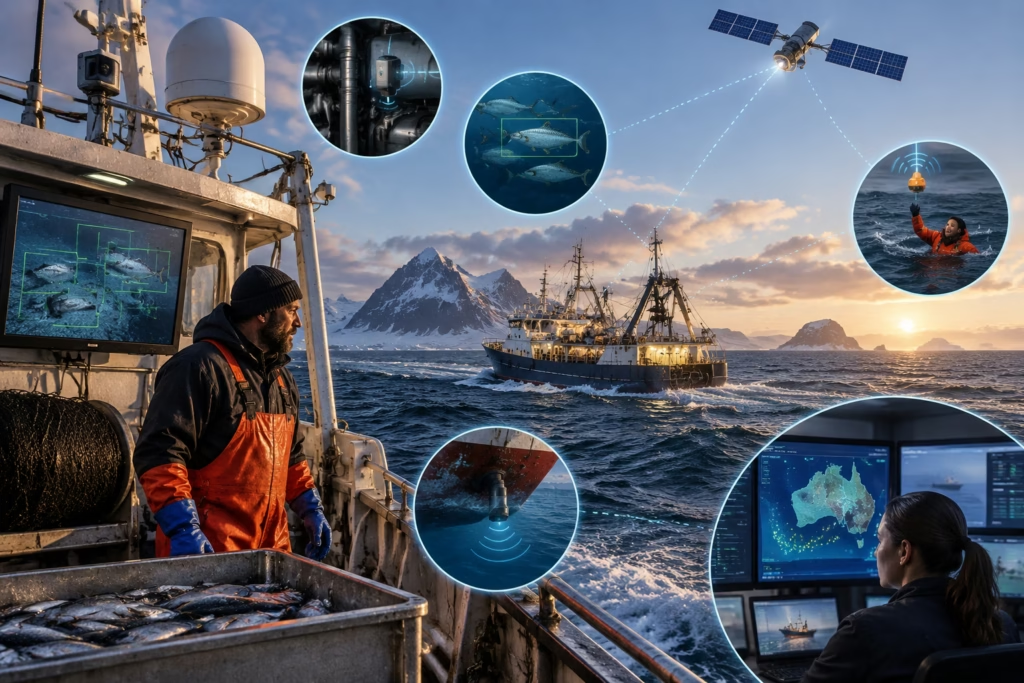
Australian startups are now embedding Near Field Communication (NFC) tags and Quick Response (QR) codes at the point of harvest. When a tuna is landed, a deckhand scans a tag, instantly creating a digital record on the blockchain. This record captures the GPS coordinates of the catch, the water temperature, the vessel name, and the method of catch (e.g., pole-and-line vs. longline).
Because blockchain data is immutable, no entity in the supply chain can alter the date or location after the fact. For consumers, scanning a code on the packaging reveals a visual map of the fish’s journey. This level of transparency is changing consumer behavior. Retailers are finding that products with verified digital provenance command a price premium of 10-20%, as buyers are willing to pay for certainty regarding legality and sustainability.
Reducing Post-Harvest Loss
Traceability is not just about fraud prevention; it is about efficiency. The cold chain for seafood is notoriously fragile. A breakdown in refrigeration for even a few hours renders high-value tuna worthless.
IoT-enabled logistics platforms developed by Australian startups integrate temperature sensors directly into the shipping container and the blockchain record. If the temperature deviates from the safe range, the smart contract is alerted. This allows the logistics manager to re-route the shipment or address the refrigeration issue in real-time, rather than discovering a spoiled product upon arrival. For a country exporting vast quantities of premium rock lobster and abalone to China, maintaining the integrity of this cold chain is essential to retaining market access and reducing food waste.
Integrating with Government Compliance
The Australian government’s push for digital export documentation has accelerated the adoption of these platforms. Startups are developing Application Programming Interfaces (APIs) that allow their private blockchain systems to speak directly with the Department of Agriculture, Fisheries and Forestry (DAFF) export portal.
This integration means that when a shipment is ready to leave, the exporter doesn’t need to manually fill out lengthy paperwork. The data is pulled directly from the blockchain, verified by the government, and the certification is issued instantly. This seamless “trade single window” approach reduces friction at the border and ensures that Australian seafood maintains its reputation for safety and compliance in international markets.