The Prefab Revolution: How Modular Construction is Solving Australia’s Housing Crisis
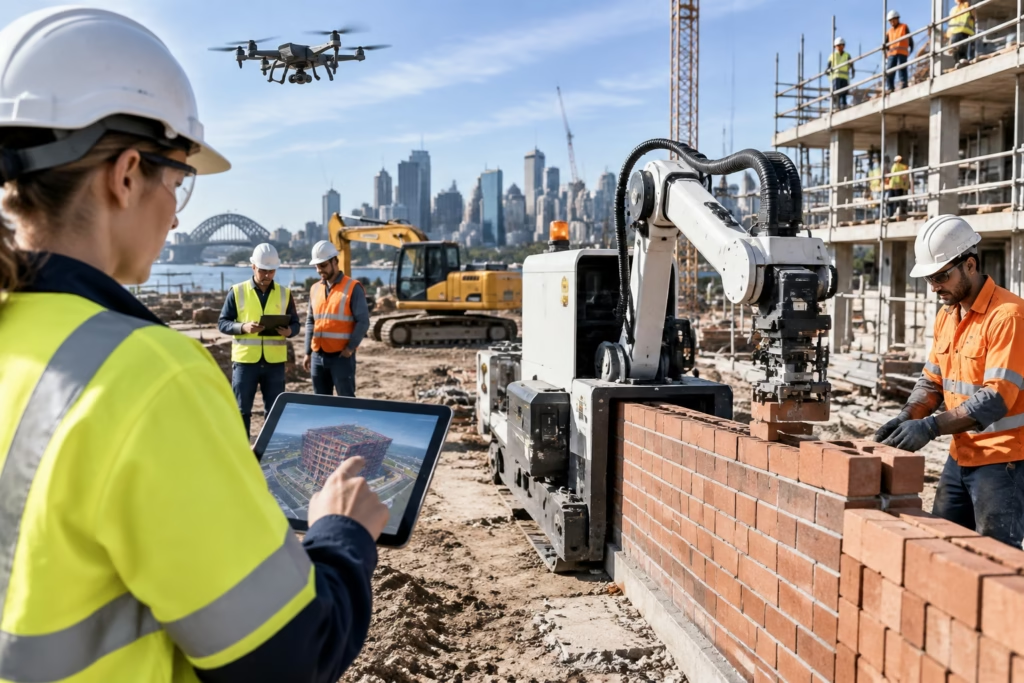
The traditional image of Australian construction—a block of land with bricklayers working for months under the hot sun—is being challenged by the factory line. Faced with a severe housing shortage and weather delays exacerbated by climate change, the industry is turning to prefabrication (prefab) and Modular construction. This method involves building entire rooms or sections of a building in a controlled factory environment before transporting them to the site for assembly. In 2026, this is no longer a niche market; it is a critical component of the national housing strategy.
Speed to Market: Building in Weeks, Not Months
The most compelling advantage of modular construction is time. While a traditional build might take nine to twelve months to complete, a modular home can be manufactured, delivered, and installed in a matter of weeks. For state governments trying to deliver social housing and for mining companies establishing remote camps, this speed is invaluable.
The factory setting eliminates weather delays. Rain, extreme heat, and wind—which often halt on-site construction—are irrelevant inside a manufacturing plant. This allows for a continuous production schedule. Construction companies like Fleetwood and ATCO Structures have expanded their operations in Australia to meet this demand, producing not just dongas (temporary site sheds) but luxurious multi-story apartment complexes.
Precision Engineering and Quality Control
Building indoors also enhances quality. Materials are stored in a controlled environment, preventing moisture damage and warping. Factory jigs ensure that walls are perfectly square and plumbing is installed with precision that is difficult to achieve in the mud and chaos of a construction site.
This precision reduces the “snagging” phase—the period after construction where defects are fixed. For developers, this translates to lower maintenance costs in the first years of a building’s life. Furthermore, the assembly line nature of prefab allows for significant economies of scale. A factory in Melbourne or Brisbane can produce hundreds of identical bathroom pods or kitchen units for a large apartment project simultaneously, driving down the per-unit cost dramatically.
Addressing the Urban Infill Challenge
One of the emerging trends in 2026 is the use of modular construction for “urban infill”—building on small, awkward blocks of land that traditional contractors often avoid. Because modular units are lifted by crane into place, they require less laydown space and can be maneuvered into tight laneways and rear lots.
This is unlocking valuable land in established inner-city suburbs. Rather than buying a house to demolish and rebuild over a year, homeowners are opting to crane in a pre-designed modular home at the back of their existing property. This increases urban density without the disruption of a long construction process. While the stigma of “prefab = temporary” still exists among some older generations, younger buyers are attracted to the high-end finishes and sustainable materials used in modern modular factories.
The shift towards off-site manufacturing represents a fundamental restructuring of the labor market. Construction workers are transitioning from subcontractors on the road to full-time employees in factories, offering better work-life balance and safety conditions. This structural change is vital for attracting a new generation of workers to the industry.