The Post-Pandemic HQ – Redefining Corporate Innovation Through Flexible Workspace Partnerships
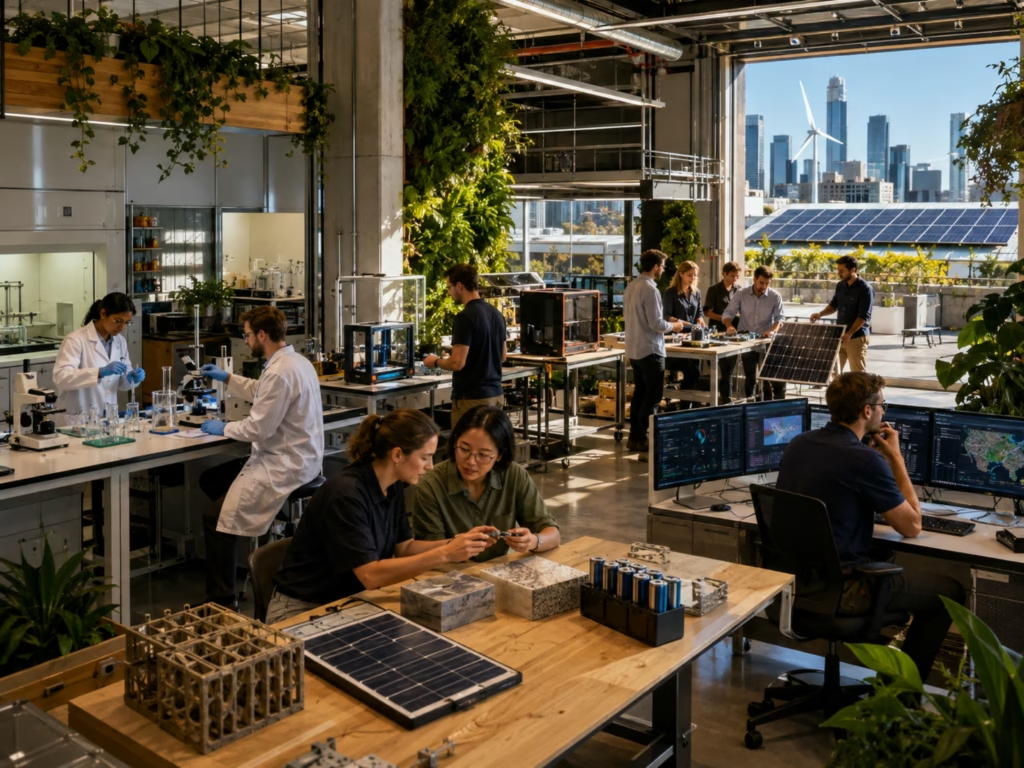
For decades, the corporate headquarters represented stability and authority. In 2026, however, the most forward-thinking Australian banks, retailers, and insurers are realizing that the physical layout of a traditional HQ is often the primary inhibitor of innovation. To combat bureaucratic stagnation, large enterprises are increasingly decamping their “innovation units” and “digital squads” into coworking spaces, betting that the culture of the ecosystem will rub off on their employees.
Injecting Speed into Slow Systems
Large organizations are inherently risk-averse, and their physical environments reflect that. Cubicles, security passes, and closed-door meeting rooms reinforce a culture of caution. Coworking spaces, by contrast, are designed for speed. The open layouts, natural light, and buzz of other founders create a psychological shift in corporate employees.
When a bank places its fintech development team inside a startup hub in Sydney’s Barangaroo, the proximity to actual fintech startups changes the team’s risk appetite. They see founders shipping code daily, failing fast, and pivoting without endless committee meetings. This “cultural osmosis” is invaluable. It allows corporate teams to adopt a lean startup methodology without having to fight the institutional gravity of the main office.
Talent Acquisition and Retention for Corporates
Young, high-performing tech talent often rejects corporate job offers, not because of salary, but because of the environment. They do not want to be stifled. By housing their innovation teams in vibrant coworking spaces, corporates are effectively “catfishing” talent.
The corporate team gets to enjoy the perks of a modern workspace—baristas, networking events, gym access—while still maintaining the job security and benefits of a large employer. This hybrid model has proven highly effective in retaining software engineers and UX designers who might otherwise leave for the allure of a high-growth startup. It signals that the corporate is willing to meet the modern workforce on its own terms.
Strategic Scouting and M&A
Perhaps the most strategic reason for a corporate to move into a coworking space is simply to watch. These environments are the hunting grounds for emerging technology. By having executives physically present in the ecosystem, they gain early visibility into trends, technologies, and potential acquisition targets.
Instead of relying on expensive consultants, the corporate innovation lead can simply have coffee with the founder of a rising logistics AI startup in the shared kitchen. This informal scouting process is faster and more accurate than traditional market research. In the fast-paced digital economy of 2026, having your corporate employees embedded within the startup ecosystem isn’t just a real estate strategy; it is a competitive intelligence strategy that can define the future direction of the company.