Ethical and Sustainable Corporate Governance in Australia
Australia is rapidly becoming a leader in fostering business practices that prioritize both sustainability and ethics. The Australian corporate sector is undergoing a significant transformation, with companies adopting new policies that reflect a growing recognition of their role in addressing global environmental and social challenges. These policies are influencing the way businesses operate, with an increasing focus on responsible corporate governance and ethical decision-making.
One of the main drivers behind this transformation is the regulatory environment in Australia, which encourages businesses to adopt more sustainable practices. The Australian government has enacted a number of policies to reduce carbon emissions, promote renewable energy, and encourage businesses to take an active role in addressing climate change. For instance, businesses are incentivized to invest in renewable energy solutions through mechanisms like the Clean Energy Target (CET) and the Renewable Energy Target (RET). These initiatives encourage companies to make long-term investments in sustainable technologies, helping them reduce their environmental impact.
In addition to environmental sustainability, ethical practices in business are increasingly seen as essential in Australia’s corporate landscape. The Australian corporate governance framework places a strong emphasis on ethical behavior, requiring businesses to be transparent, fair, and accountable in their dealings with investors, employees, and consumers. Regulatory bodies such as ASIC and the ASX Corporate Governance Council provide guidelines to ensure that companies follow ethical principles in areas like financial reporting, executive remuneration, and risk management.
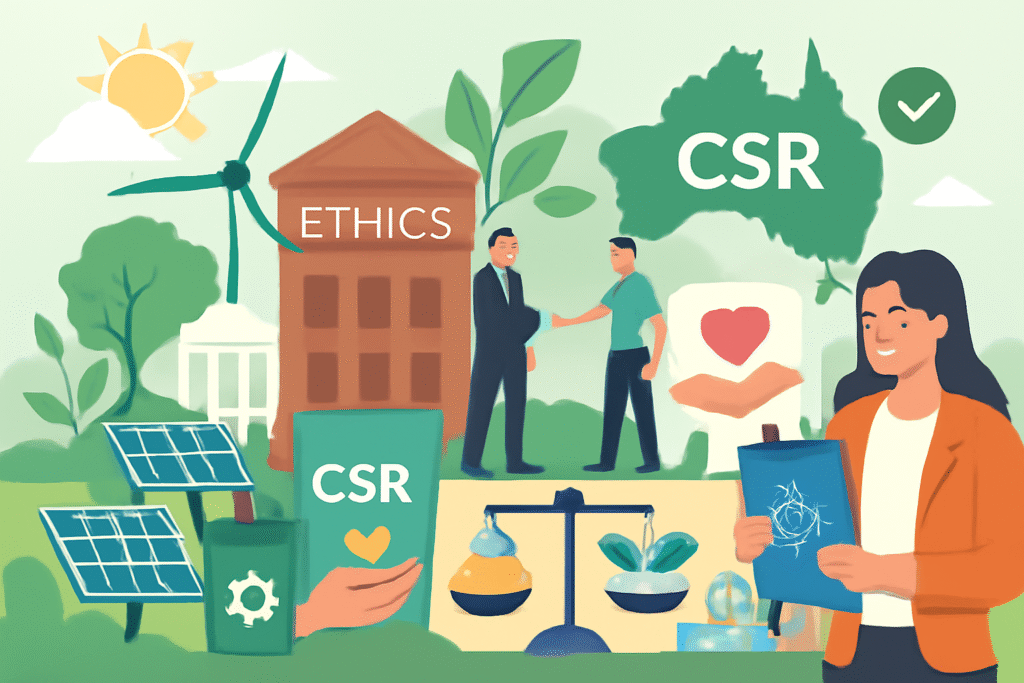
Corporate social responsibility (CSR) is another key component of Australian corporate governance. Australian companies are expected to demonstrate their commitment to social and environmental issues by adopting CSR strategies that deliver positive impact. This includes initiatives like reducing waste, promoting diversity and inclusion, supporting community programs, and ensuring ethical sourcing practices. These actions not only help address pressing societal challenges but also contribute to a company’s long-term success by enhancing its reputation and building trust with consumers and investors.
One area where Australian businesses are making significant strides is in their supply chains. Companies are increasingly held accountable for the practices of their suppliers, ensuring that ethical labor standards are maintained and that environmental sustainability is prioritized. This has led to the rise of responsible sourcing practices, where businesses assess the environmental and social impact of their suppliers before entering into partnerships. This focus on supply chain ethics is seen as a vital step in ensuring that companies align with global standards for human rights and sustainability.
By adopting sustainable and ethical business practices, Australian companies are not only improving their own operational efficiency and brand reputation but also contributing to the broader goal of building a more sustainable global economy. Investors are also increasingly attracted to companies with strong ESG credentials, recognizing that such companies are more likely to succeed in the long term. As a result, businesses in Australia are increasingly integrating sustainability and ethics into their corporate governance models to stay competitive in an evolving market.